Have you ever stopped to consider how our increasingly diverse society impacts the way our public services operate?
As you walk through your local area, you might notice the rich blend of languages and cultures that make up our communities. This diversity poses some interesting challenges for our public sector. For example, how do local councils, the NHS and other vital public services ensure they’re communicating effectively with everyone they serve?
Translation and interpretation services play a crucial role in helping public sector organisations achieve this.
But, are these services really necessary? Are they a worthwhile investment or an additional expense in already stretched public sector budgets?
In this blog, we’ll explore the role of translation and interpretation in our public services. We’ll look at why they’re more crucial than you might think, and how they’re shaping the way our public sector operates in our diverse communities.
Translation and interpretation services in the public sector
Translation and interpretation services are essential for making public services accessible to Deaf individuals. They help Deaf people understand Government communications, participate in education, access vital health and emergency services and engage in community activities. Without them, Deaf people may face significant barriers to accessing information and services that others take for granted.
These services are particularly crucial in the following areas of the public sector:
- Healthcare – In medical settings, accurate communication can be a matter of life and death. Interpreters ensure that Deaf patients can effectively communicate their symptoms, understand their diagnosis and follow treatment plans.
- Legal system – In courts and police stations, BSL interpreters are vital to ensure fair treatment and access to justice for Deaf individuals. They enable Deaf people to understand their rights, provide accurate statements and fully participate in legal proceedings.
- Education – From primary schools to universities, interpreters and translators help Deaf learners access the same quality of education as their hearing peers. It extends beyond the classroom to pastoral care, parent-teacher meetings, extracurricular activities and career guidance.
- Social services: When accessing benefits, housing support or other social services, Deaf individuals need to be able to communicate their needs clearly and understand the options available to them. Interpreters play a key role in ensuring this communication is effective.
- Local government: From council buildings to public consultations and everything in between, interpretation and translation services ensure that Deaf residents can participate fully in local democracy and have their voices heard on issues affecting their communities.
Providing interpretation and translation services helps the public sector demonstrate its commitment to equality and inclusion. It ensures that Deaf individuals can exercise their rights, fulfil their responsibilities and participate fully in society.
However, providing these services can be challenging. Budget constraints, a shortage of qualified interpreters and sometimes a lack of awareness about the importance of these services can all pose obstacles. Despite these challenges, the benefits of providing comprehensive translation and interpretation services far outweigh the costs. They help improve the lives of Deaf individuals while enhancing the effectiveness and reputation of public sector organisations.

BSL translation’s role in public transport services
Public transport is a vital service for many people, including Deaf individuals. Access to real-time information is crucial for helping Deaf people navigate transport systems.
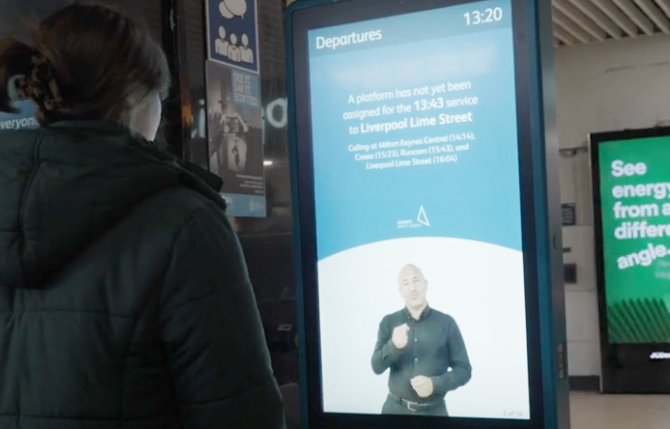
With our support, companies like LB Foster are leading the way in developing digital solutions for the rail industry. Integrating BSL translation into digital timetable displays and announcements can greatly enhance accessibility for Deaf passengers. It ensures they receive timely and accurate information about train schedules, delays and platform changes, which is essential for safe and efficient travel.
Check out the video case study below to see how we’re working with LB Foster to make passenger information more accessible within stations. Our solution provides communication in British Sign Language, helping to create a more accessible experience for Deaf rail users.
How can Sign Solutions help?
Translation and interpretation services, particularly those involving BSL, are crucial for ensuring that Deaf individuals can access and participate in public services on an equal footing. From local authorities and educational institutions to emergency services and leisure centres, these services play a vital role in promoting inclusivity and effective communication.
At Sign Solutions, we provide accredited communication professionals and support for Deaf, Deafblind and hard of hearing users in any domain, from legal and medical to business, leisure, education and community settings.
If you want help or advice on making your public sector organisation more accessible with expert interpretation and translation services, we’d love to hear from you. Call us on 0843 178 0773, email bookings@signsolutions.uk.com or contact us via a BSL video interpreter.