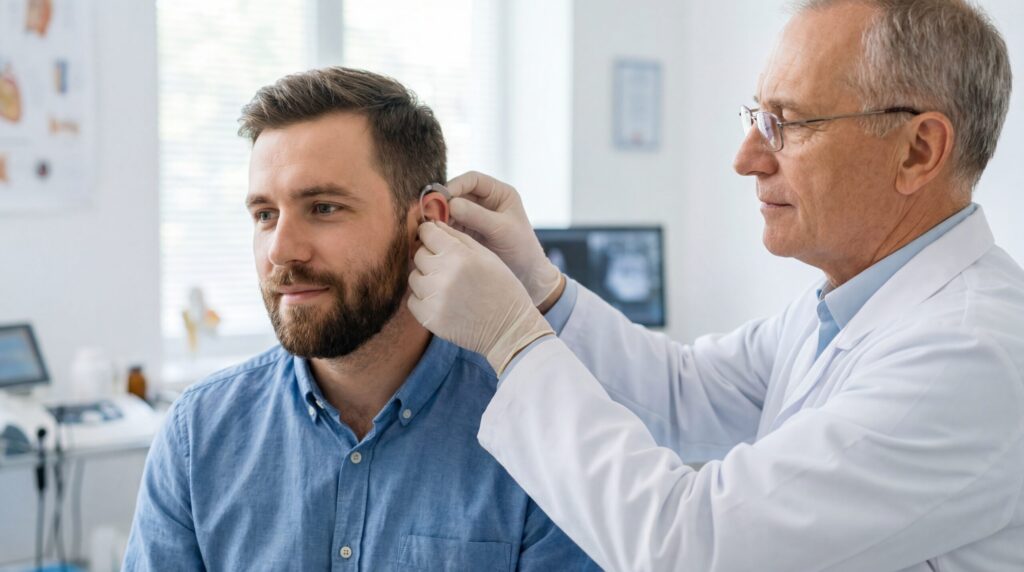
Healthcare teams work hard to deliver compassionate, high‑quality care. Yet even the best clinical expertise can fall short if patients can’t fully access the information they’re given.
For Deaf and hard of hearing people, this gap can be especially stark.
Clear communication is central to safe, effective healthcare. It’s essential that Deaf and hard of hearing patients are afforded the same high levels of care as anyone else.
Deaf patients often face additional barriers to understanding their own diagnoses and care options when the proper provisions aren’t put into place to aid their comprehension. Deaf awareness in healthcare settings directly improves patient experience, trust and outcomes.
This blog explains why it’s so important.
What does Deaf Awareness mean in healthcare?
Deaf awareness means widening your team’s understanding of the barriers and needs of your Deaf patients in your healthcare setting.
This could include gaining an overview of the different levels of hearing loss, and some of the solutions used to aid communication. For some, this might mean using British Sign Language (BSL), but others may rely on hearing aids or lip reading, all of which have different requirements to maximise their effectiveness.
When communication breaks down in healthcare settings, the consequences can be serious.
Misunderstanding of symptoms, diagnoses and treatment options can put patients at genuine risk. Medication could be prescribed or administered incorrectly due to breakdowns in communication. Patients may agree to pursue a treatment they haven’t fully understood.
On an emotional level, patients may feel excluded from decision-making, or like they can’t play an active role in their own healthcare. This can lead to feelings of isolation and put them off seeking further care in future.
A breakdown of confidence and trust in healthcare providers can put patients at serious risk in future, if they’re afraid or uncomfortable about accepting medical treatment and advice.
How Deaf awareness improves the patient experience
There are many simple ways that your staff can adapt their day-to-day communication styles to support your Deaf patients, ensuring that they feel heard, understood and respected.
Patients who feel at ease are more likely to ask questions, clarify points they haven’t understood and confirm what they have, ensuring that everyone is on the same page when it comes to their care.
This allows patients to feel safer, calmer, more supported and more in control of their decisions, improving their satisfaction and willingness to engage with healthcare services in future. A positive experience for a small issue today can help build trust and confidence in seeking help for the bigger, more life-altering things that may occur in future.
Simple changes that make a big difference
There are a few small changes that anyone can make right away.
For example, facing patients when speaking, and ensuring they have good lighting for lip reading. Speaking clearly, without shouting or exaggerating, can also be beneficial.
Providing visual aids, written information and follow-up summaries can help to clarify information and instructions.
Sometimes, it may be necessary to use the support of a professional BSL interpreter for patient care, where lip reading, hearing aids and visual aids don’t go far enough. This could be particularly important for clarity when patients are making significant choices about their healthcare, which could have life-changing impacts.
In some cases, family members may volunteer to interpret. While this might be a tempting offer, we always recommend you use professional interpreters instead. This ensures that all information passed between the patient and practitioner is communicated accurately and in full, with no omissions. Family members with the best intentions may alter information to protect their loved ones or omit options that they don’t believe are in their best interests.
For safeguarding reasons, it’s also important that patients and doctors can freely communicate without relying on a family member. Some issues may be confidential or sensitive in nature, which they may not wish to discuss in front of a loved one.
Consent can’t be gained from a patient without the presence of a qualified and trusted professional interpreter to ensure that all the facts have been provided to the patient.
Building Deaf awareness into healthcare teams
Deaf awareness increases staff confidence when communicating with Deaf patients, reducing anxiety and uncertainty around saying the wrong thing. This, in turn, makes patients feel safer and better understood.
Accessibility should be built into the culture of your healthcare setting, as it helps to ensure patient safety and comfort. Empathy and patience go a long way to making patients feel at ease, and this can be achieved through a better understanding of one another.
Sign Solutions offers bespoke Deaf Awareness Training for healthcare professionals and teams, including advice on legal obligations and best practice in healthcare settings.
We can also help you find and hire BSL interpreters to work in person or remotely from our network of NRCPD-registered professionals, including those with healthcare expertise.
Get in touch today to learn how we can support you in building more effective, Deaf aware teams.