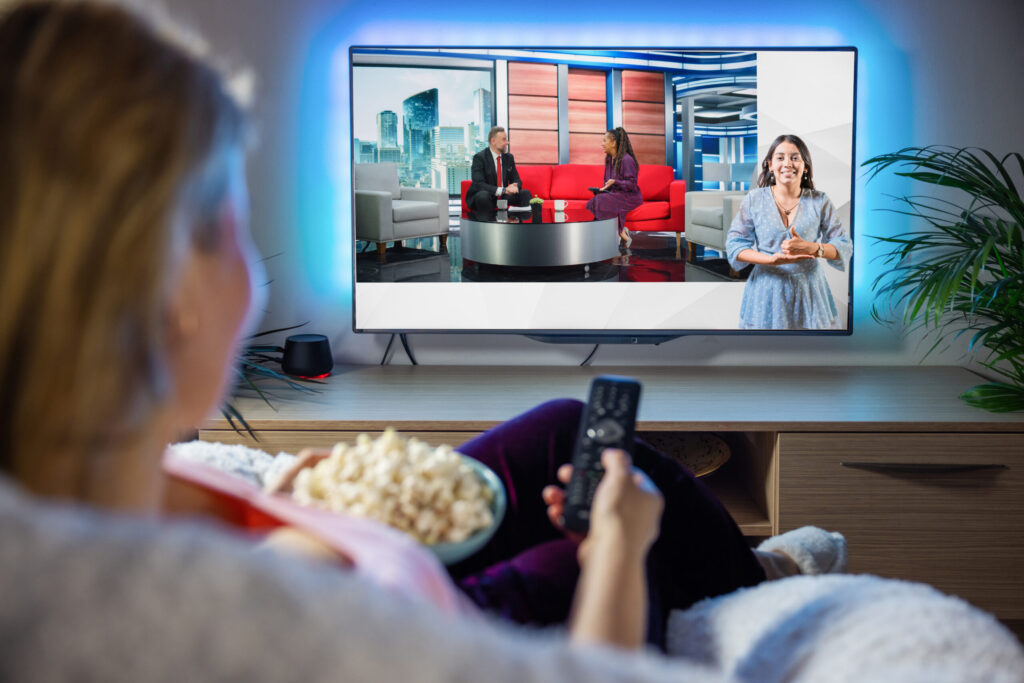
Picture this: you’re lounging on the sofa, ready to dive into your favourite TV show. The drinks are chilled, the lights are dimmed and the volume’s turned up high.
Watching TV like this is something many hearing people take for granted. But for many Deaf people in the UK, enjoying telly isn’t always so simple. That’s why we have signed TV programmes – a vital service that makes television more accessible to the Deaf community.
But what exactly are signed TV programmes, and why do they matter so much?
Well, you’ve probably seen them and might even have wondered what they are. These are the shows that feature a British Sign Language (BSL) translator, usually in the corner of the screen, translating the spoken content into BSL. They allow Deaf viewers to follow along and enjoy the programme just like anyone else. It’s not just about entertainment, though. Signed TV programmes play a crucial role in keeping the Deaf community informed and connected. From news bulletins to documentaries, these shows ensure that important information is accessible to everyone, regardless of their hearing abilities.
But despite the importance of this service, signed TV programmes are still relatively rare. Many Deaf people feel left out of the conversation when it comes to television, and that’s simply not good enough. In this blog post, we’ll take a closer look at signed TV programmes – how they work, why they’re so important and what more needs to be done to make television truly inclusive for all.
What are signed TV programmes?
Signed TV programmes are television shows that include sign language translators who appears on screen, translating spoken dialogue and other relevant audio information into sign language. The translator is typically shown in a corner of the screen while the main content plays, enabling Deaf or hard of hearing viewers to understand what’s going on. The sign language translators role is to convey all auditory information in the programme to viewers who rely on sign language for communication. This includes:
- Dialogue – Translating the spoken words of characters, hosts and narrators.
- Sound effects – Describing relevant sounds that contribute to the storyline or setting.
- Emotions and undertones – Conveying the emotional tone and inflections of the speakers, which is crucial for understanding context and subtext.
Why are signed TV programmes important?
Signed TV’s main purpose is to make television accessible to the Deaf and hard of hearing community. Without sign language interpretation, many viewers miss out on the full experience of TV shows, movies, news broadcasts and other televised content. Providing sign language interpretation promotes a more inclusive society. It acknowledges the needs of individuals with hearing loss and ensures they’re not excluded from cultural, educational and entertainment content.
In many countries, broadcasting regulations require that a certain percentage of TV programmes be accessible to people with disabilities, including those with hearing loss. Signed TV programmes help broadcasters meet these legal requirements. And featuring sign language on mainstream television can raise awareness about the Deaf community and sign language itself. It helps normalise the presence of sign language interpreters, reducing stigma and fostering greater understanding and acceptance.
Examples of signed TV programmes
Many news channels provide sign language translation for their major news bulletins, ensuring that critical information is accessible to all. Some children’s shows include sign language to support early learning and inclusivity from a young age. Select TV dramas and series offer signed versions, making sure that Deaf viewers can enjoy popular entertainment. And important public messages, such as those related to health and safety, often include sign language interpretation/translation.
The evolution of signed TV programmes
Signed TV programmes have evolved significantly over the years. Initially, the availability of such programmes was limited, often restricted to specific time slots or particular types of content. However, with growing awareness and advocacy from the Deaf community, the presence of sign language interpreters on TV has increased.
Technological advances have also played a role, allowing for better integration of sign language interpretation into a wider array of programming. Today, many broadcasters strive to provide sign language options for a more diverse range of shows, reflecting the changing landscape of accessibility in media. Despite the progress, there are still challenges in the implementation of signed TV programmes.
The availability of qualified sign language translators is a major issue. The demand for interpreters often exceeds the supply, which can limit the number of programmes that can be signed. There are also technical challenges when it comes to ensuring that the translator is visible and that their signing is synchronised with the audio.
Solutions to these challenges include investing in the training of more translators, leveraging the latest technologies to improve integration and engaging with the Deaf community to better understand and address their specific needs and preferences. So, whether you’re a viewer or a content creator, supporting and advocating for more signed TV programmes can make a significant difference in the lives of many Deaf people, and help to nurture a media environment that truly caters to all.