Deaf awareness can help you create a workplace that promotes inclusion, communication and teamwork. It can also help ensure that every member of your team feels like a valued member of the organisation. This blog explores some of the simple steps you can take to improve Deaf awareness in your workplace.
What is Deaf awareness?
Deaf awareness is about understanding the experiences, culture and communication needs of Deaf and hard of hearing people in your workplace and beyond.
Deaf aware teams know how to communicate effectively with their Deaf and hearing colleagues. They’re also mindful of potential barriers, from noisy environments to inaccessible meetings.
Ultimately, it’s about creating a workplace where everyone can participate fully and confidently, which benefits every member of the team.
Communication best practices
Simple tweaks, such as facing a person when speaking, speaking one at a time, clearly and with your lips visible, can all make a significant difference to communication with Deaf employees. Follow-up minutes or emails which summarise the contents of the meeting can also help to ensure that nothing gets missed.
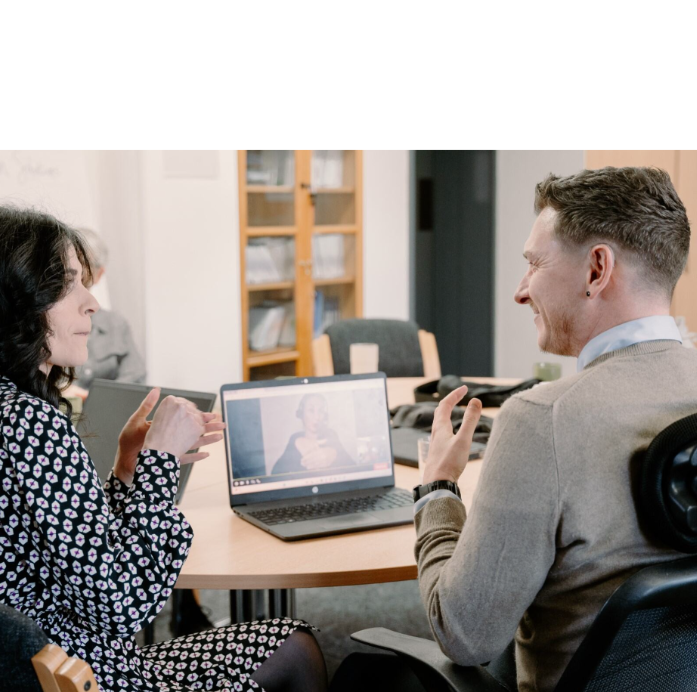
For some Deaf colleagues, you may need to provide BSL interpreters. In these cases, allow extra time for the meeting to take place. It’s also important that other colleagues understand the role of the interpreter in the conversation, to ensure that they’re giving enough time to process the information, and that they’re addressing the colleague they’re talking to, even if the message is passed through an interpreter. It may also be useful to provide interpreters with information such as agendas before the meeting, so they know what to expect and can prepare accordingly.
Making sure your workspaces and meeting rooms are well lit will ensure your Deaf employees are best equipped for lip reading and picking up on visual cues. Good lighting can also help those using sign language or other visual communication methods, so they can see facial expressions and gestures clearly.
Additionally, consider seating arrangements in meetings. Positioning everyone in a circle or semi-circle ensures that all participants are visible, supporting effective communication, particularly for colleagues who rely on lipreading.
Simple measures such as closing doors, using quiet zones, arranging desks away from noisy equipment or adding sound-absorbing materials can also make a big difference.
Using speech-to-text software during meetings can be invaluable in helping your Deaf employees to keep up with the conversation. Sharing agendas and/or slides in advance of the meeting can allow everyone to prepare and follow along.
Visual aids can also be useful in helping to guide the meeting topics and communicate key points.
These adjustments don’t just benefit your Deaf employees. They’ll also help improve concentration and communication for the whole team.
Benefits of Deaf awareness
Deaf awareness doesn’t only help Deaf employees to thrive in the workplace. Many of the adjustments you make to support your Deaf employees can improve the performance of your hearing colleagues, too. Greater Deaf awareness can contribute to:
- Improved communication across your teams.
- Enhanced employee satisfaction and retention.
- A broader talent pool and more inclusive recruitment.
- Stronger company reputation and better customer service.
Creating a culture of inclusion
Deaf Awareness Training is most effective when it’s offered to everyone in your organisation, not just a select few.
Ensuring all your staff take part, including new hires as part of their induction, will help you create a shared understanding of the practices, adjustments and communication approaches that support Deaf colleagues. It will help you embed inclusiveness into the everyday culture of your business.
As such, you shouldn’t view Deaf Awareness Training as a one-off exercise. Like any area of professional development, it works best as part of an ongoing programme that evolves alongside your organisation. As your business grows and new best practices emerge, you can refresh and adapt the training to reflect the latest guidance and lived experiences of your Deaf employees.
The feedback you gather from your Deaf and hearing employees is just as valuable. Their insights can highlight what’s working well and where you need to make further improvements, allowing you to refine strategies that fit seamlessly within your workplace.
When used in this way, Deaf Awareness Training is the catalyst for building a genuinely inclusive and respectful workplace culture.
How can Sign Solutions help?
Sign Solutions is proud to provide Deaf Awareness Training in workplaces of all shapes and sizes across the UK. It can take place remotely or in-person, across a half or full day.
If finance is a barrier to providing this training in your organisation, you may be able to claim Access to Work funding to cover all or some of the associated costs. Access to Work aims to remove any financial barriers that disadvantage disabled colleagues in the workplace. We also guide you through the application process.
Get in touch today to see how we can help you to create a more inclusive and cohesive team that caters to the needs of all your employees.