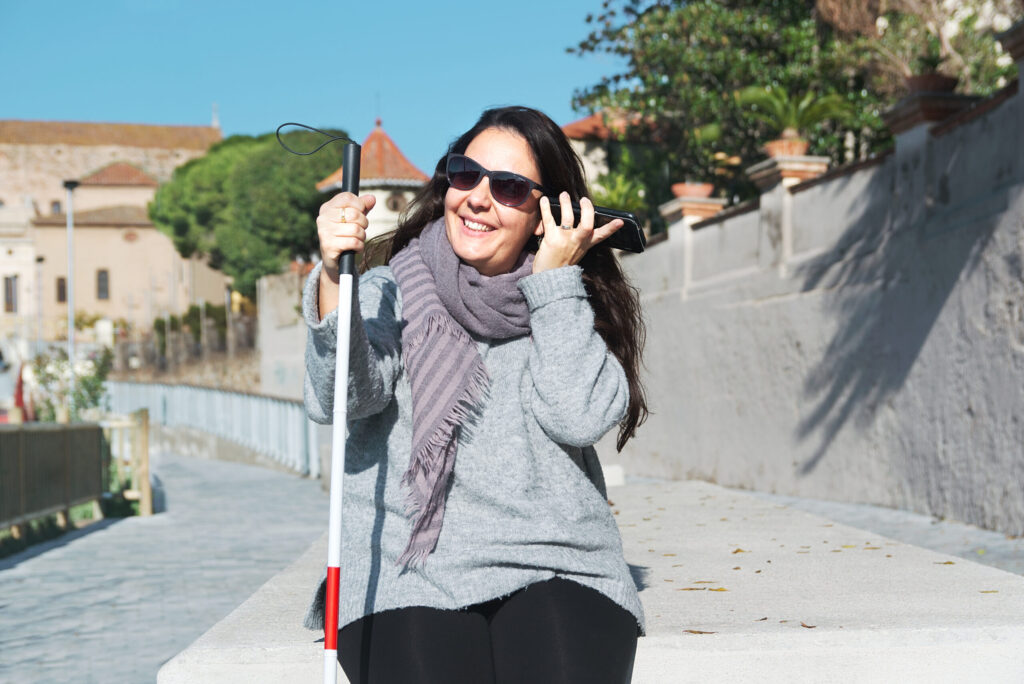
Deafblindness is a unique sensory disability that affects both hearing and vision.
Individuals who are Deafblind have varying degrees of hearing and vision loss, which can impact their ability to communicate, access information and participate in daily activities.
Deafblind people are part of both the Deaf and Blind communities, but they have specific needs that are not always met by either.
They rely on tactile communication methods like British Sign Language (BSL) to communicate with others or use specialised equipment such as vibrating pagers to alert them to sound.
Effective communication is crucial for individuals who are Deafblind as it enables them to access information, participate in social activities and engage in meaningful interactions with others. However, communicating with Deafblind individuals can be a challenge as traditional methods of communication, such as spoken language and visual cues, may not be effective.
In this blog post, we’ll discuss best practices for communicating with Deafblind individuals.
We’ll explore various communication methods, tips for effective communication, common communication barriers, and solutions for overcoming them.
By following these best practices, we can promote inclusivity and accessibility in communication and help individuals who are Deafblind lead more fulfilling lives that are filled with meaningful connections and experiences.
Common communication methods for Deafblind individuals
Communicating with people who are deafblind can be a challenge for hearing people but more so for the Deafblind individual. It’s important to understand that there is no one-size-fits-all communication system. Each Deafblind individual has their own preference and it’s important to take the time to learn about and understand these preferences, ask what they need.
British Sign Language
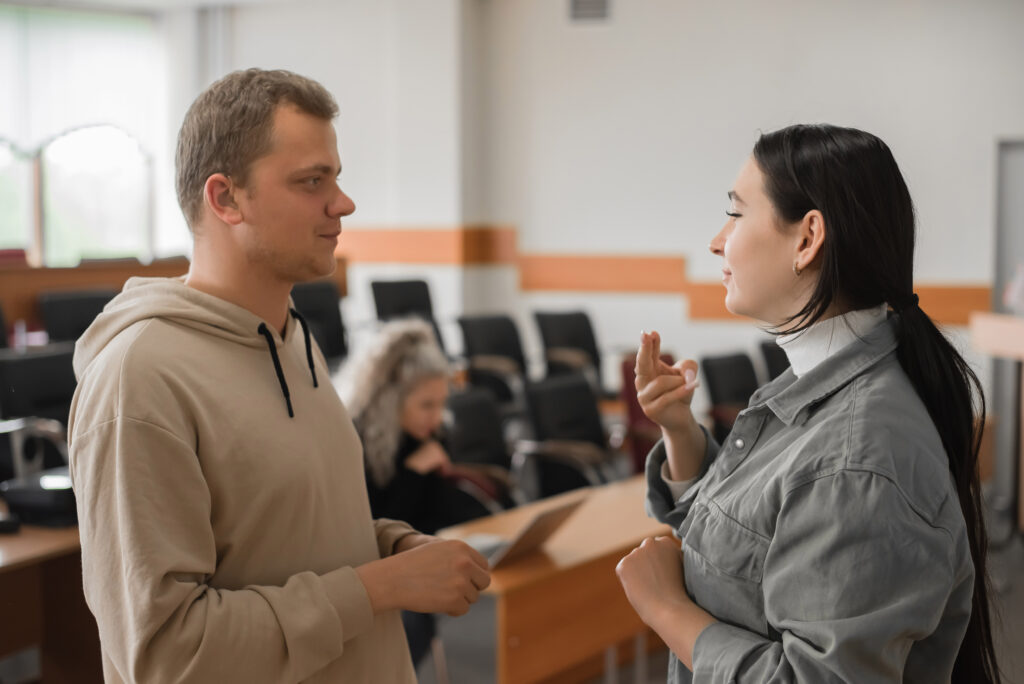
Not all Deafblind people are profoundly Deaf or blind, but BSL can still be a common form of communication for them. Knowing sign language or at least basic signs will help in getting improved communication between hearing and Deafblind individuals. It’s all about knowing what will work for the specific individual. Block communication is the most preferred method of communication.
Lip reading
Some Deafblind people will be able to lip read which often comes part and parcel with sign language. Sign Language requires facial expressions and body language to gain better understanding, and lip reading can be involved with that as well. The lighting is a major factor to consider, as vision can be enhanced through suitable amounts of lighting and no shadows or flickering neon lights.
Block
The block alphabet is a tactile language that uses the English capital letters, drawn onto the palm, to communicate messages. For Deafblind individuals with more extreme hearing loss and blindness, this is one of the easier forms of communicating.

Braille
Another common form of communication is Braille. This writing system uses embossed paper where each letter is symbolised by a series of raised dots that can be felt with the fingertips. Creating documents in braille for Deafblind clients on request.
Hands/coactive signing
Hands on – or coactive – signing mirrors BSL, only you place your hands on top of someone else’s to feel the movement of the signs. This works especially well for Deafblind users who may have more severe deafness and blindness.
Common communication barriers and solutions
One of the primary barriers to effective communication with Deafblind individuals is a lack of familiarity with the communication methods they use. As mentioned earlier, Deafblind individuals may use tactile communication, sign language, or Braille to communicate. If a person is not familiar with these methods, communication can be challenging.
To overcome this barrier, it’s essential to learn about the communication methods used by Deafblind individuals. Attend training sessions, read articles and watch videos. Additionally, seek guidance and feedback from Deafblind individuals and their support teams to enhance your knowledge and skills.
Assistive technology can be expensive and not readily available to everyone. This can create a communication barrier for Deafblind individuals who rely on it to communicate and access information.
One solution is to explore funding options for assistive technology. Many organisations provide financial assistance for individuals who require it, such as the Access to Work scheme.
Another common communication barrier is a limited understanding of the individual’s needs. Deafblind individuals have unique communication needs that are specific to their degree of hearing and vision loss. If these needs are not understood, communication can be difficult. To overcome this, it’s crucial to have open communication with the Deafblind individual and their support team. Ask questions to understand their communication needs, preferences, and any adjustments or accommodations they may require. Be patient and willing to adapt your communication style to meet their needs.
Cultural and linguistic differences can also create communication barriers for Deafblind individuals. For example, a Deafblind person who uses American Sign Language (ASL) may have difficulty communicating with someone who uses BSL. So, it’s essential to become familiar with the individual’s cultural and linguistic background.
Learn basic signs or phrases in their preferred language to facilitate communication. Additionally, consider working with an interpreter who is familiar with the individual’s preferred language and culture.
Tips for communicating effectively with Deafblind people
Introducing yourself is the first step in communicating with a Deafblind person. It’s also important to keep your body language open and friendly, and to use facial expressions if possible.
It’s best to speak slowly and clearly so that the Deafblind person can understand you better and it’s important to be patient and understanding when communicating.
Some Deafblind people may have an interpreter or guide with them. It’s vital that you continue to speak directly to the Deafblind person and not their companion. Just as it’s advisable when communicating with a Deaf person, they are a person and the recipient of the information you give. It will also help both parties gain a better understanding of what you’re saying or signing.