Add Your Heading Text Here
Over the years YouTube has grown as a huge online platform for users to share video content across a range of topics. You can find videos on just about anything, and there is something for everyone. YouTube is also a great way to learn new things and keep up with the latest trends.
A recent study found that watching educational videos on YouTube can help improve your memory and understanding of complex concepts. And if you’re looking for a workout without having to leave your house, there are plenty of fitness channels on YouTube that can give you a great workout.
YouTube is also a great way to entertain yourself or others. There are millions of funny, informative, and interesting videos available, so you’re sure to find something to watch when you need a break from the mundane tasks of everyday life.
However, with the rise of video content comes a number of challenges for Deaf and Hard of Hearing people, especially when creators don’t use appropriate
captioning or sign language on their content.
With access to thousands of online users, YouTube is a great way for Deaf people to share their experiences, educate others and spread awareness of Deaf culture.
Our favourite Deaf-friendly YouTube channels
Some people might not know what it’s like to live in a world where you can’t hear anything, but there are many deaf-friendly YouTube channels that can help you get an idea of what it’s like to be Deaf, to become more understanding. These channels are made by Deaf people or people who are part of the Deaf community, and they use BSL or captioning to communicate with their viewers to
ensure accessibility for all users.
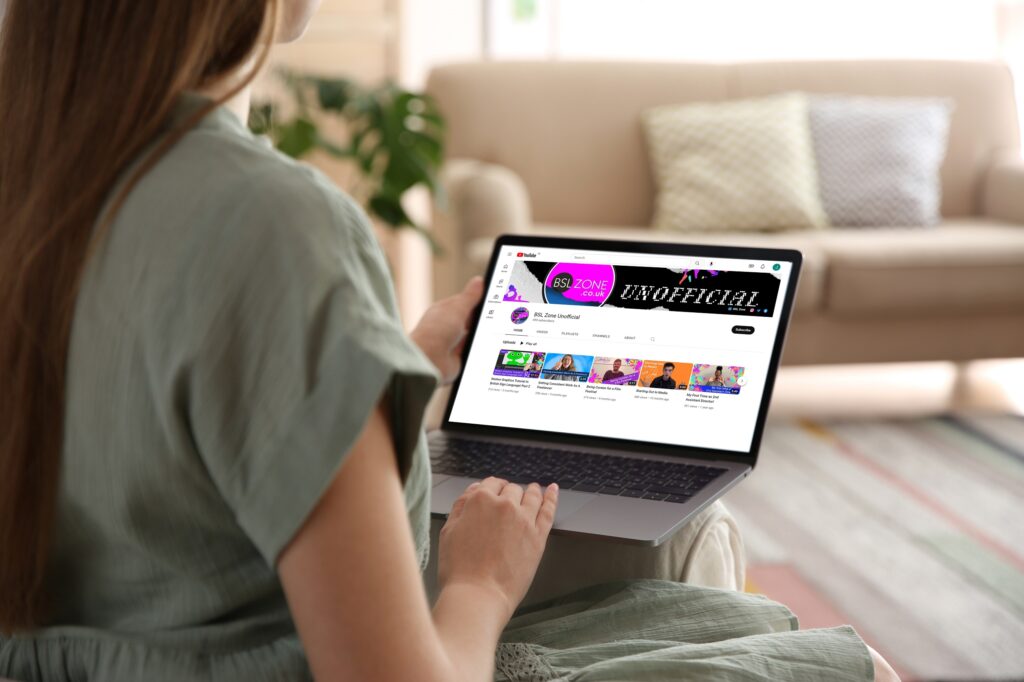
BSL Zone Unofficial – BSL Zone commissions television programmes made in British Sign Language (BSL). The YouTube channel shares regular content from young Deaf creators all in BSL with English subtitles.
Jazzy – Jazzy is a young Deaf YouTuber who uses her channel to share all the positives of life in the Deaf community. She also uses her platform to educate others on Deaf awareness and sign language.
 Jessica Kellgren-Fozard
 – Jessica Kellgren-Fozard is a British YouTuber known for her videos on deaf/disability awareness, LGBT history, and vintage fashion. In some of her videos she breaks down common misconceptions that many Deaf people face, such as Hearing people asking why she ‘doesn’t sound Deaf’ and so on.
Hearing Like Me – Hearing Like Me is a channel dedicated to the Deaf and Hard of Hearing community. All the stories the channel shares are created by people with hearing loss, family members of loved ones with hearing loss or hearing loss experts to help educate the world on Deaf experiences.
Rikki Poynter – Rikki Poynter creates and shares content about Deaf awareness, accessibility, closed captioning, mental health and more. With over 90,000 subscribers to her channel, she reaches thousands of people with every video she shares.
Commanding Hands – Commanding Hands gives users the chance to learn British Sign Language for free through video tutorials. For anyone looking to learn BSL, this channel is a great way to get started with the basics as well as the higher level BSL.
National Deaf Children’s Society – The official YouTube channel for the National Deaf Children’s Society shares stories from children in the Deaf community, offers tutorials on BSL signs, and general news and updates.
How YouTube is helping to break down barriers for the Deaf community
As the world’s largest video sharing platform, YouTube has been instrumental in breaking down barriers for Deaf people. For years, Deaf people have been at a disadvantage when it comes to accessing information and entertainment. But with YouTube, they can now watch videos with subtitles or sign language interpretation.
This has made a huge difference for the deaf community, who can now enjoy the same content as everyone else. And it’s not just entertainment – YouTube is also helping to make educational and informational videos more accessible to Deaf people.
There’s still a long way to go before YouTube is fully accessible to deaf people, but it’s definitely making a difference. And that’s good news for everyone.
Deaf vloggers and YouTubers across the whole platform can use their following, no matter how big or small, to talk about topics that affect Deaf people and those around them to create a better relationship between both Deaf and Hearing communities.
The media, including YouTube and social media creators, shapes people’s self-image and plays a huge role in societal norms. Inclusivity is crucial to making people feel seen and heard and the YouTube channels and creators we’ve mentioned in this article are all doing their part to creating a more accessible and inclusive world both online and offline.
Why not check them out?