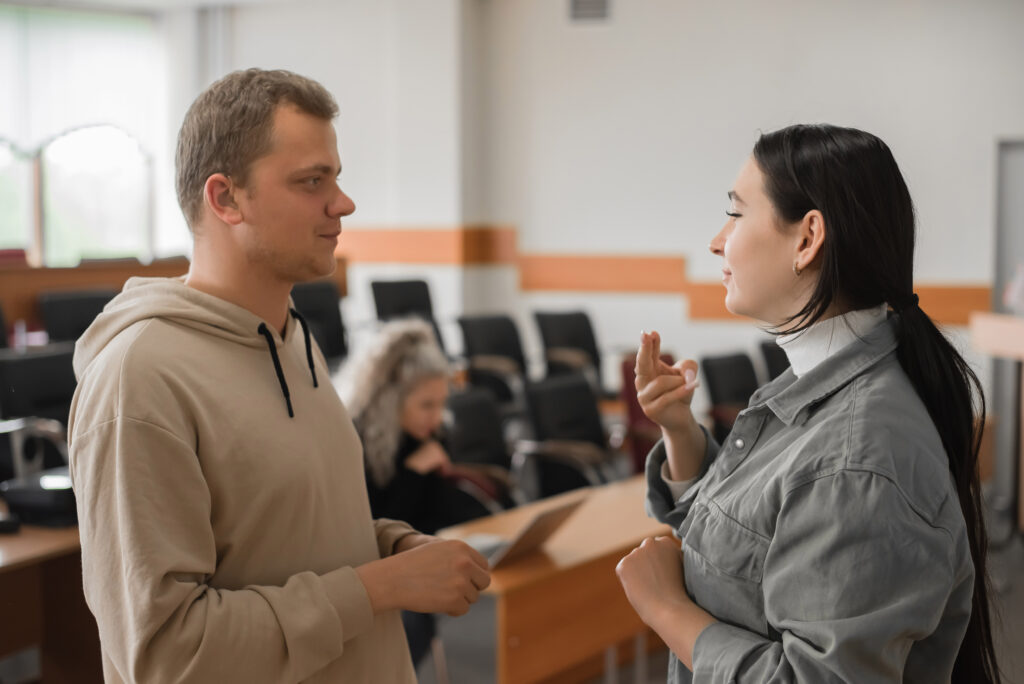
There are approximately 87,000 Deaf people who use British Sign Language (BSL) as their preferred language in the UK. This substantial community represents an audience that many venues inadvertently exclude due to accessibility barriers.
Beyond the legal requirements of the Equality Act 2010, which mandates reasonable adjustments for disabled people, making your venue accessible to Deaf audiences makes good business sense.
Accessible venues report increased attendance, improved customer loyalty and enhanced reputation. They also benefit from the spending power of the Deaf community and their friends and family, who often make decisions about where to spend leisure time based on accessibility.
This guide provides practical steps for venue managers and event organisers to make their spaces more welcoming to Deaf audiences.
Understanding Deaf audiences
The Deaf community is diverse, with varying degrees of hearing loss, communication preferences and experiences. Many Deaf people, but not all, use BSL as their first or preferred language. BSL is a rich, visual language with its own grammar and structure, entirely different from written or spoken English. It was recognised as an official language in the UK in 2003 and given legal protection through the British Sign Language Act 2022.
Other Deaf people may prefer lip-reading, written communication or a combination of methods depending on the situation. Some may use hearing aids or cochlear implants, while others do not. This diversity means there’s no one-size-fits-all approach.
A common misconception is that all Deaf people can lip-read effectively. In reality, only about 30% of speech is visible on the lips, making lip-reading an incomplete and often exhausting method of following conversations, especially in group settings or performances.
Many Deaf people consider themselves part of a cultural and linguistic minority rather than disabled. Understanding this perspective can help venue managers create inclusive spaces that respect Deaf culture and language.
Physical modifications for your venue
Making your venue physically accessible involves several key considerations.
Clear sightlines are essential for Deaf audiences who need to see interpreters, performers’ faces for lip-reading, or visual displays. Ensure your seating arrangements allow unobstructed views, especially in designated accessible areas. Consider how pillars, screens or other structural elements might block sightlines from certain seating positions.
Lighting plays a crucial role. Well-lit faces are easier to lip-read, and BSL interpreters need adequate lighting to be visible. Avoid positioning interpreters in shadowy areas or with bright lights behind them that create silhouettes. During performances, ensure interpreters have separate lighting that remains consistent even when stage lighting changes.
Visual alert systems for emergencies are vital safety features. Traditional audio fire alarms and announcements are ineffective for Deaf people. Install flashing light alerts connected to your alarm system and ensure emergency information is displayed visually on screens throughout your venue.
Your reception and service areas should be designed with Deaf customers in mind. Low counter sections allow for easier face-to-face communication, while good lighting on staff’s faces helps with lip-reading.
Digital display boards throughout your venue can show announcements, programme changes or other vital information that might otherwise be shared verbally. These visual cues benefit all customers but are particularly valuable for Deaf audiences.
Communication support
Professional communication support is often necessary to make events fully accessible. BSL interpreters can translate spoken content into BSL and vice versa, making performances, talks and interactive events accessible to BSL users.
When booking interpreters, work with reputable agencies like Sign Solutions that provide qualified interpreters registered with NRCPD. Book well in advance, as qualified interpreters are in high demand. For performances, provide scripts and content beforehand so interpreters can prepare effectively.
For events lasting more than two hours, you may need to book two interpreters who can alternate, as interpreting is mentally taxing work requiring regular breaks. Position interpreters where they can be easily seen by Deaf audience members, typically to the side of the main action but well-lit and elevated if necessary.
Speech-to-text services provide real-time captioning displayed on screens, benefiting those who prefer written English. This service works well for conferences, talks and educational events. It can be provided remotely or in person, with text displayed on dedicated screens or integrated into presentation slides.
Hearing loops (also called induction loops) can assist people who use hearing aids with the T-setting. However, remember that many Deaf BSL users don’t use hearing aids, so loops should complement rather than replace your other accessibility measures.
On-demand interpreting services like InterpretersLive! can provide immediate access to BSL interpreters via video. This can be particularly useful for customer service or box office queries or unplanned situations where a pre-booked interpreter isn’t available.
When budgeting, include communication support costs from the outset. The Access to Work scheme might help fund some services for Deaf staff, but customer accessibility is your venue’s responsibility. Consider it an investment rather than an expense. Accessible venues attract a wider audience and build customer loyalty.
Staff training
Well-trained staff are essential for creating a welcoming environment for your Deaf customers. You should provide basic Deaf awareness training to all your customer-facing staff, covering:
- Communication basics, such as maintaining eye contact, speaking clearly and ensuring adequate lighting for face-to-face conversations
- Simple BSL words and phrases
- How to work effectively with interpreters
- Alternative communication methods when no interpreter is present
Your front-of-house staff should be trained in emergency procedures for Deaf visitors, including how to provide visual alerts and ensure safe evacuation. Reception and box office staff need specific training on handling booking requests for accessible performances and communicating access information.
Regular refresher courses help maintain awareness and skills, especially in venues with high staff turnover. Consider identifying staff members interested in developing more advanced BSL skills who could act as accessibility champions.
Marketing your accessibility
Effectively promoting your accessible venue will help Deaf people make informed decisions about visiting. Include clear accessibility information on your website, in brochures and on social media. Use recognised symbols for BSL interpretation, captioning and hearing loops, but also provide detailed descriptions of what support is available and how to request it.
Make your marketing materials themselves accessible by providing BSL videos alongside written content for important announcements. Social media videos should be captioned, and promotional emails should include images and clear, concise text.
Gather feedback regularly from Deaf visitors about their experience and implement suggestions for improvement. This helps demonstrate your ongoing commitment to accessibility rather than a one-time effort.
How can Sign Solutions help?
Starting with small, manageable changes and building on your success creates momentum towards a fully accessible venue. The benefits extend beyond legal compliance, creating a more inclusive environment that attracts new audiences and enhances your reputation.
Sign Solutions provides comprehensive support for venues looking to improve accessibility for Deaf audiences. Our services include professional BSL interpreting for events, both face-to-face and remote. Our InterpretersLive! platform offers on-demand BSL interpreting through video, providing flexibility for unplanned interactions.
We also deliver Deaf awareness training programmes tailored to venue staff, helping build confidence in welcoming Deaf customers. Our training is delivered by professionals with lived experience of Deafness and deep knowledge of Deaf culture.
We also offer consultancy services, helping venues assess their current accessibility and develop practical improvement plans. Our team can advise on physical modifications, communication support options and marketing strategies specifically for the Deaf community.
To find out more about making your venue more accessible to Deaf audiences, call Sign Solutions on 0121 447 9620, email bookings@signsolutions.uk.com or contact us via a BSL video interpreter.