Your company is planning its annual staff conference.
Some sessions will be in person. Others online.
Several Deaf employees will attend, joining from different locations.
The organising team faces a question: what’s the best way to provide interpreting support?
Should they book face-to-face interpreters, use video remote interpreting, or mix different services?
This is a common challenge for organisations supporting Deaf BSL users. With several interpreting options available, picking the right one makes a big difference to communication quality and cost.
Each type of interpreting service suits different situations.
Face-to-face interpreting works well for planned meetings and training sessions. Video remote interpreting helps teams working across different locations. On-demand services handle unexpected conversations. And BSL video relay lets Deaf people make phone calls through an interpreter.
Matching the service to the situation helps everyone communicate more effectively.
The right choice depends on many factors – the type of conversation, how many people are involved, where they’re located, and how urgently interpreting is needed. This article explores the different types of interpreting to help you choose the right service.
Types of interpreting services available
Face-to-face interpreting puts a BSL interpreter in the room with the Deaf and hearing participants. The interpreter works directly with everyone present, picking up on social cues and body language that help create a natural conversation flow. This works especially well for complex discussions, lengthy meetings and formal presentations.
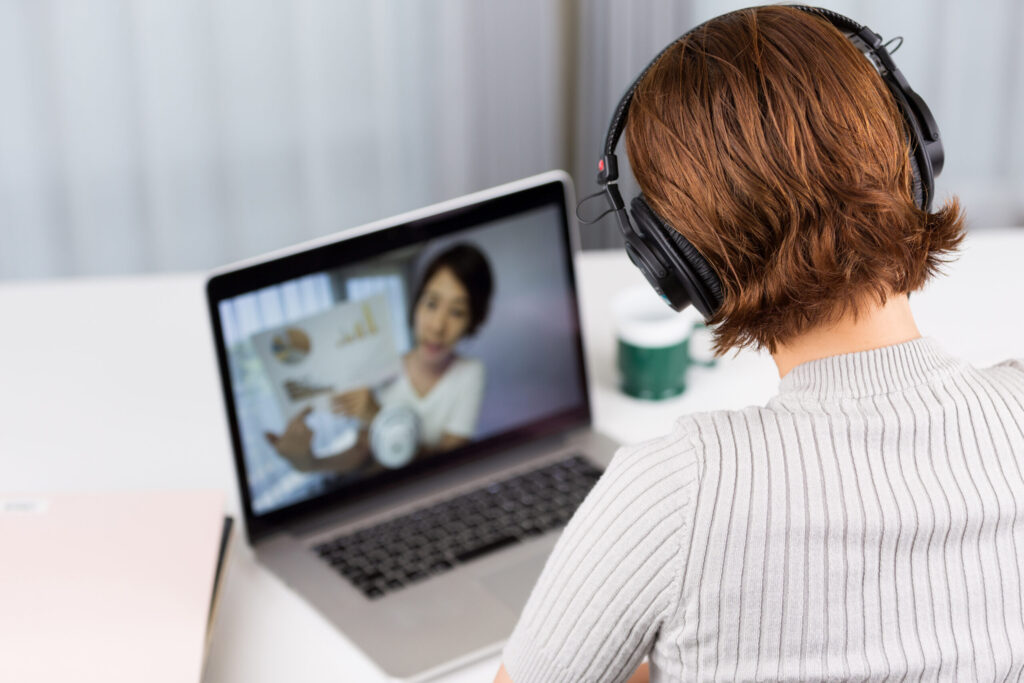
Video remote interpreting connects everyone through screens. The interpreter appears via video link, while participants might be together in one room or joining from different locations. This cuts out travel time and works well for shorter meetings, especially when teams work across different sites.
On-demand interpreting gives instant access to an interpreter through platforms like InterpretersLive!. A few clicks connect Deaf and hearing people to a qualified interpreter. It’s ideal for unexpected meetings or quick conversations that can’t wait for a scheduled interpreter.
BSL video relay helps Deaf people make phone calls. The interpreter speaks to the hearing person on the phone while signing with the Deaf person through video. This opens up telephone communication for tasks like booking appointments or speaking with customer service teams.
Factors to consider when choosing
Here are some practical things to think about when comparing these services. Start with the type of conversation – is it a complex negotiation needing face-to-face interpretation, or a quick chat that on-demand interpreting could handle?
Group size affects the choice, too. Small meetings might work fine with video interpreting, but larger groups often benefit from face-to-face interpreters who can manage turn-taking and group dynamics more easily.
Time matters in two ways.
How long will the session last? Longer meetings usually work better with scheduled interpreters. How soon do you need the interpreter? On-demand services are best for your urgent needs.
Location also plays a big part. Are all the participants in one place? Will some join remotely? Each setup might require a different interpreting solution.
Check what technology you have available – a good internet connection, suitable screens and clear audio are essential for video interpreting services.
And don’t forget the costs. Factor in interpreter time, travel expenses for face-to-face sessions and any technical requirements. Balance this against your budget and how important the communication is.
Best uses for face-to-face interpreting
Face-to-face interpreting is best for situations with complex interactions. Annual conferences and full-day training sessions benefit from having interpreters in the room. The interpreter can manage multiple speakers, group activities and detailed technical discussions.
Medical appointments often work best with face-to-face interpreters, too. They can help navigate sensitive conversations and pick up on important non-verbal cues. The interpreter moves with patients and medical staff between different hospital areas or treatment rooms.
Complex meetings, like job interviews or legal discussions, tend to run smoother with face-to-face interpreters. They can handle detailed documents, multiple participants and the subtle dynamics of formal situations.
Best uses for video remote interpreting
Video remote interpreting suits team meetings where some people join from different locations. Remote workers can participate more fully in team updates or project discussions through the video interpreter.
Client meetings and external conversations also work well through video interpreting. Everyone sees the interpreter clearly on screen, making it easy to have professional discussions without the travel time.
The service helps dispersed teams stay connected. Regular catchups and quick discussions flow naturally when everyone’s used to video meetings.
Best uses for on-demand interpreting
On-demand interpreting can handle your unexpected communication needs. If a Deaf customer walks into your shop or an urgent question comes up at work, connecting to an interpreter takes seconds.
It’s also good in emergencies. Healthcare teams can get immediate communication support when Deaf patients arrive at A&E.
Customer service teams use on-demand interpreting to help Deaf customers who call or visit. Staff can address queries or solve problems straight away instead of booking appointments.
The service supports spontaneous workplace conversations. Team members can discuss ideas or ask questions without waiting to schedule an interpreter.
Best uses for BSL video relay
BSL video relay opens up phone communication for Deaf people. They connect to an interpreter through video, who then makes voice calls on their behalf. This works well for booking appointments, calling utility companies or speaking with friends and family who don’t sign.
The service handles quick calls smoothly. Deaf people can sort out banking queries, check delivery times or follow up on job applications. They see the interpreter signing on screen while the interpreter speaks with the person on the phone.
Making the right choice
Look at what you need to achieve through the conversation.
Will participants share complex information?
Do you need to handle written materials?
Does everyone need to see body language clearly?
Ask what Deaf participants prefer. Some might want face-to-face interpreting for important meetings but find video interpreting fine for daily catchups. Others might like on-demand services for quick conversations.
Check your technical setup matches the service you choose. Video interpreting needs good internet and clear screens. On-demand services work best with devices that have quality cameras.
Set a realistic budget. Factor in regular meetings, training sessions and day-to-day communication needs. Compare costs between different services to find the best value for your specific situation.
How Sign Solutions can help
We provide all these interpreting services through our qualified BSL interpreters. Our team helps organisations pick the right mix of services for their needs. We look at how you work, what technology you have, and how often you need interpreting support.
We guide you through setting up each service. Our team shows you how to book interpreters, use our platforms and get the best results from each type of interpreting. We provide training for staff and ongoing support to keep everything running smoothly.
To find out more and get expert advice on choosing the right interpreting services for your organisation, call us on 0843 178 0773, email bookings@signsolutions.uk.com or contact us via a BSL video interpreter.