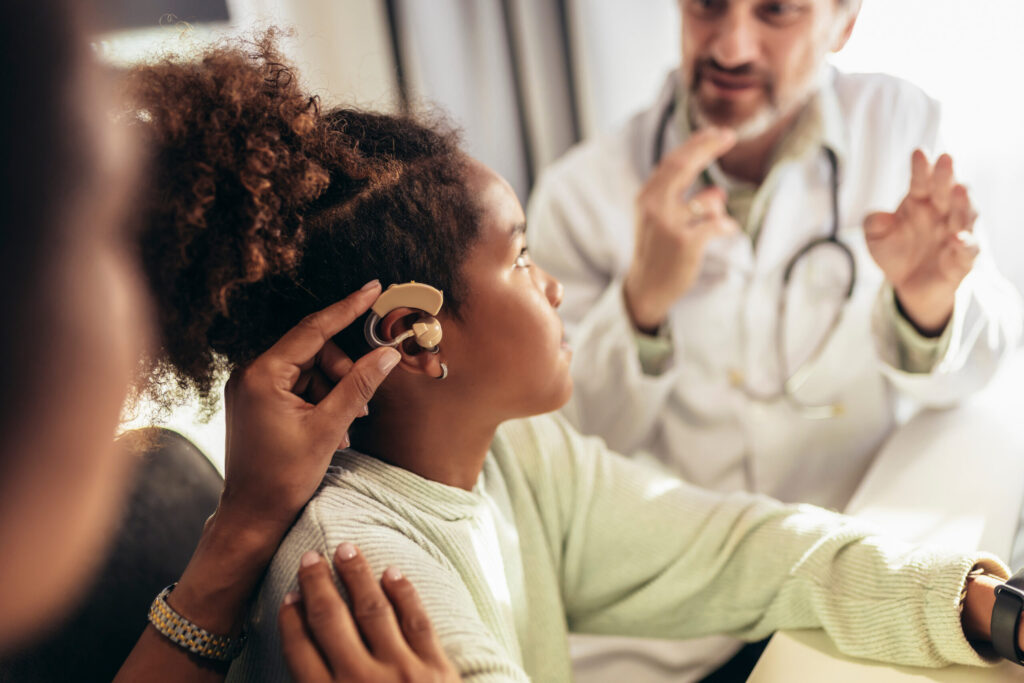
Last year, the Royal National Institute for Deaf People (RNID) and SignHealth published a report called Still Ignored: The fight for accessible healthcare. Its findings make for uncomfortable reading. According to the report, nearly one in five people said they need a communication support professional, such as a BSL interpreter, lipspeaker or notetaker, to be present during appointments. Yet 67% of sign language users and 62% of people who need another type of communication support professional have been denied that support at some point.
The report also found that 69% of people who are Deaf or have hearing loss say they’ve never been asked about their information and communication needs when accessing NHS care. Not once.
For a healthcare system built around patient-centred care, that’s a significant gap. For Deaf patients, it can have very real consequences.
This isn’t about asking providers to do something extraordinary. It’s about the need for some fairly fundamental changes to the way care is delivered. Here are some practical steps your organisation can take to make your healthcare services more accessible for Deaf patients.
What can we learn from the ‘Still Ignored’ report?
The headline statistic is striking enough on its own, but the picture the report paints goes further than that. Deaf patients and those with hearing loss are routinely missing out on information that hearing patients take for granted.
Appointments are being misunderstood. Diagnoses are being miscommunicated. And, perhaps most worryingly, many Deaf people are avoiding healthcare settings altogether because their previous experiences have been so difficult and distressing.
These aren’t isolated incidents or edge cases. For many Deaf people, this is what healthcare feels like, confusing, exhausting and often leaving them less informed about their own health than they have every right to be. The consequences can range from unnecessary anxiety to genuinely serious clinical risk.
It’s also worth being clear that this isn’t a new problem. Deaf patients and campaigners have been raising these concerns for years. What the Still Ignored report does is confirm, with hard evidence, what the Deaf community already knew. That means healthcare providers now have both the data and the moral responsibility to act on it.
Ask about communication needs, every time
The most straightforward place to start is also one of the most simple, and most overlooked. Asking patients how they prefer to communicate, and making sure that information is recorded and used.
Under the Equality Act 2010 and the NHS Accessible Information Standard, identifying and meeting the communication needs of patients with disabilities, including Deaf patients, isn’t optional. It’s a requirement. Yet the RNID/SignHealth report shows that for the majority of Deaf patients, it isn’t happening consistently.
The good news is that the fix here isn’t complicated. Embedding a communication needs question into your patient registration process, pre-appointment forms, and check-in systems means it becomes part of the routine rather than something left to individual staff members to remember or forget. Once you know a patient uses BSL, prefers written communication or relies on lip-reading, that information should follow them through every interaction with your service. Not just the first one.
Book a qualified BSL interpreter
When a Deaf patient who uses British Sign Language comes in for an appointment, they deserve access to a qualified, registered BSL interpreter. Not a family member pressed into service. Not a colleague who did a beginner’s BSL course a few years ago. And not an assumption that written notes or lip-reading will fill the gap. For many Deaf patients, they won’t.
A registered interpreter will have the skills to handle clinical terminology accurately and will understand the professional boundaries and confidentiality requirements that come with working in a healthcare setting. That matters enormously when someone is trying to understand a diagnosis, discuss their mental health concerns, or give informed consent to a procedure.
Where possible, book your interpreter in advance and brief them on the nature of the appointment so they can prepare. Think about the physical setup of the room, too. Your patient needs a clear line of sight to both you and the interpreter.
If an in-person interpreter isn’t available at short notice, remote BSL interpreting is a practical alternative. Services like Sign Solutions’ InterpretersLive! platform can connect your patient with a qualified interpreter quickly, so an unexpected appointment or urgent consultation doesn’t have to mean going without support.
Train your staff in Deaf awareness
You can have the best booking systems and policies in place, but if the people delivering care don’t have a basic understanding of Deaf awareness, things will still fall through the cracks. Staff attitudes and behaviours have an enormous impact on how welcome and understood a Deaf patient feels from the moment they walk through your door.
Deaf Awareness Training gives your team a solid grounding in how to communicate more effectively with Deaf and hard of hearing patients. But beyond the formal training, there are small, everyday behaviours that cost nothing and make a real difference. Face the patient when you’re speaking. Don’t cover your mouth. Don’t shout, because it distorts lip patterns and doesn’t help.
Check that information has been understood without being condescending about it.
This isn’t just a job for your reception team, either. Clinicians, administrators, porters, pharmacists and anyone who might interact with a Deaf patient will benefit from being more Deaf-aware. It’s a team-wide responsibility.
Make your written and digital communications accessible
For many Deaf people, particularly those who use BSL as their first language, written English can be a significant barrier. BSL has its own grammar and syntax, which means dense, jargon-heavy letters and leaflets can be difficult to follow. And yet much NHS correspondence still looks exactly the same as it always has.
Switching to plain English in your patient communications is one of the most impactful changes you can make, and it benefits a much wider range of patients than those who are Deaf. If you’re producing video content, accurate captions and BSL translations can make a real difference. Digital appointment reminders should be clear and easy to act on. And in your waiting areas, visual displays showing patient call numbers mean your Deaf patients aren’t anxiously watching for a name to be called out that they might not hear.
A quick note on the legal picture
It’s worth being clear that accessible healthcare for Deaf patients isn’t a nice-to-have. The Equality Act 2010 places a legal duty on service providers to make reasonable adjustments for people with disabilities. And the NHS Accessible Information Standard sets out specific requirements around identifying and meeting communication needs. These obligations exist, whether your organisation has historically met them or not.
The point here isn’t to alarm anyone. It’s to reinforce that this is as much a matter of legal compliance as it is of good patient care. The two aren’t in conflict. They point in the same direction.
How can Sign Solutions help?
At Sign Solutions, we work with healthcare organisations across the UK to help them communicate more effectively with Deaf patients and service users. Whether you need a qualified BSL interpreter for a one-off appointment, a reliable solution for ongoing interpreter provision, or Deaf Awareness Training for your team, we can help you get the right support in place.
Our InterpretersLive! platform gives you access to remote BSL interpreting when you need it quickly, and our experienced team can advise you on the most appropriate communication support for your setting.
To find out more, call us on 0121 447 9620, email bookings@signsolutions.uk.com or contact us via a BSL video interpreter.