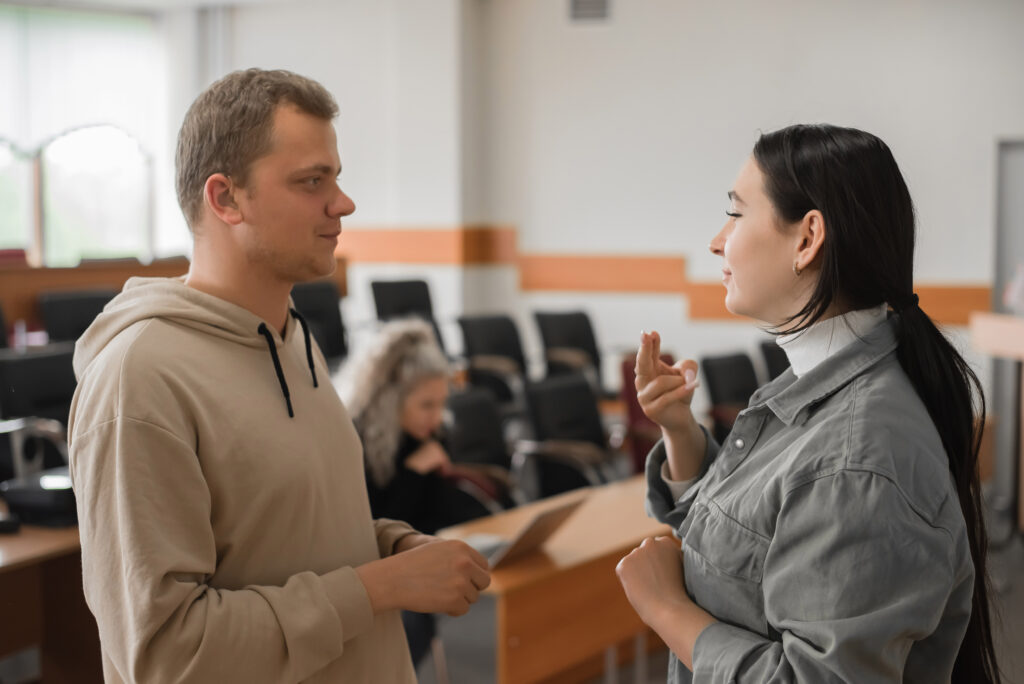
In a world that places increasing value on diversity and inclusion, it’s crucial to ensure that everyone has equal access to opportunities in society.
Deaf advocacy organisations play a vital role in breaking down barriers faced by the Deaf and hard of hearing communities.
Improved accessibility and inclusion in all settings, like schools, workplaces and in healthcare, will all aid in creating a better experience for people, whether they have learning difficulties, hidden or invisible disabilities or just need extra assistance and support.
In this blog, we’ll delve into the significant contributions of Deaf advocacy organisations towards promoting accessibility and inclusion for individuals in the Deaf and hard of hearing communities. These organisations, fuelled by a passionate commitment to levelling the playing field, have been at the forefront of advocating for policies, innovations and social change to empower those with hearing loss to fully engage in every aspect of life.
Five ways Deaf advocacy organisations help promote accessibility and inclusion
Education and awareness are pivotal in fostering inclusivity. Deaf advocacy organisations have undertaken remarkable initiatives to educate the public about the challenges faced by the Deaf community and to dispel common misconceptions. Here are some of the ways they have helped shape a fairer and more accepting society for Deaf people:
Paving the way
One of the key milestones in the journey towards accessibility and inclusion in the UK is the Equality Act 2010. This act requires businesses and organisations to make reasonable adjustments to their services and facilities to ensure equal access for all.
Deaf advocacy organisations played an instrumental role in advocating for this legislation, which ensures that individuals with disabilities, including those who are Deaf or hard of hearing, are protected against discrimination.
Creating awareness through stories
Personal experiences have the power to shape perspectives and promote change. Deaf advocacy organisations provide a platform for individuals to share their personal stories, triumphs and challenges. These stories put a spotlight on the Deaf community, helping to build empathy and understanding among the public.
Promoting accessible communication
Communication is at the heart of everything we do. Deaf advocacy organisations emphasise the importance of accessible communication methods such as British Sign Language (BSL).
They work towards increasing the availability of BSL interpreters, advocating for captioned content in the media and promoting the use of assistive technologies.
These efforts align perfectly with our mission here at Sign Solutions, to bridge communication gaps and make information accessible to all.
Fostering a vibrant community
Deaf advocacy organisations go beyond advocating for rights; they also foster a strong sense of community. Through events, workshops and social gatherings, they create spaces where Deaf and hard of hearing individuals can connect, learn and support each other.
This sense of belonging is invaluable, and we’re inspired by their dedication to creating a supportive network.
Innovation and collaboration
Advances in technology have opened unprecedented avenues for accessibility. Deaf advocacy organisations have been key drivers of change in this field. They collaborate with researchers, developers and tech companies to design and promote assistive technologies that break down communication barriers. From text-to-speech apps and captioning tools to video relay services and cochlear implants, these innovations enhance communication, learning and interaction for individuals with hearing loss.
While progress has been made, there’s always room for growth.
Deaf advocacy organisations continue to strive for a world where equal access is the norm, not the exception.
The importance of role models to the Deaf community
As well as Deaf organisations paving the way for a more accessible and inclusive society, Deaf role models and public figures also play a huge part.
Role models in the Deaf community aren’t just important for other Deaf people, it’s a key factor for our society to become more inclusive and to bridge the gaps in communication between Deaf and hearing people.
Every day, individuals belonging to the Deaf community encounter numerous obstacles and discrimination. The presence of Deaf role models in movies, television and various mainstream media platforms has had a significant influence on the Deaf community, fostering greater understanding and recognition for Deaf individuals.
These role models hold importance not only for other members of the Deaf community but also for society at large, as they play a crucial role in promoting inclusivity and bridging the communication divide between Deaf and hearing individuals.
How can Sign Solutions help?
It’s abundantly clear that Deaf advocacy organisations are pivotal in championing accessibility and inclusion. Their efforts form the bedrock of a more harmonious and equitable society. The strides made by these organisations reverberate far beyond their immediate impact, shaping the fabric of our communities and institutions.
The journey towards a world where Deaf individuals are seamlessly integrated into all facets of life rests upon the collaborative endeavours of both the Deaf and hearing communities.
The tangible outcomes we witness, from legislative changes that uphold Deaf people’s rights to technological innovations that bridge communication gaps, underscore the power of collective advocacy.
Whether it’s promoting accessible environments, using inclusive communication methods or challenging societal norms, each of us has a role to play in nurturing an inclusive society.