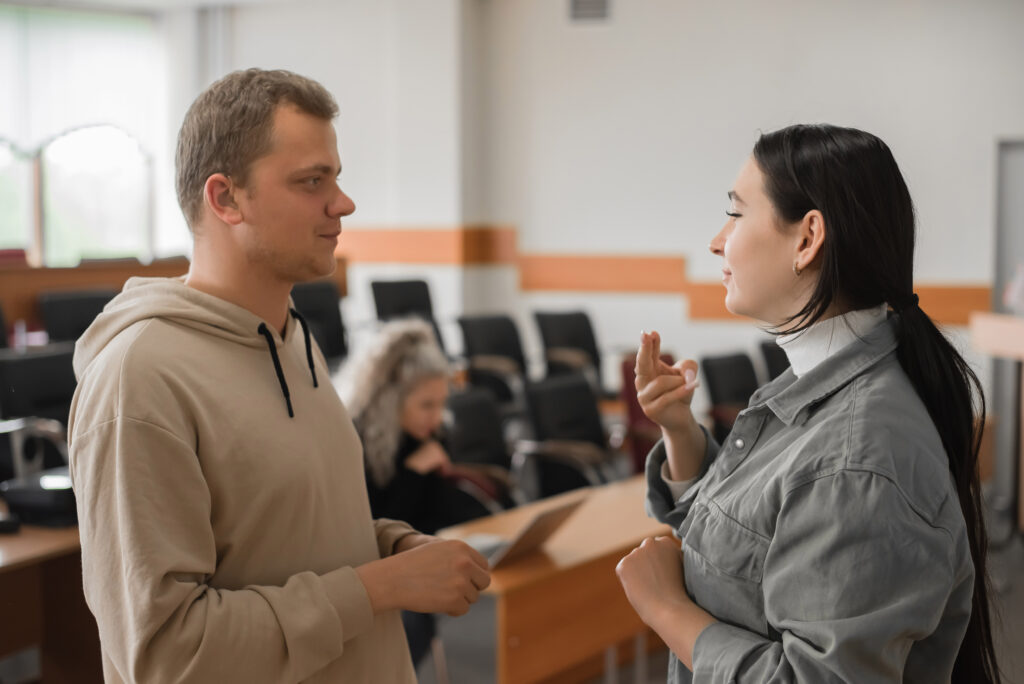
In a world where the arts serve as a universal language, it’s crucial that we strive for inclusivity in every aspect. British Sign Language (BSL) provides a means of communication for the Deaf community and offers a different perspective and layer of expression within the arts. It helps in breaking down barriers and inviting a diverse audience to participate and engage in creative activities.
BSL transforms how we experience stories, performances and visual wonders. It opens new doors and ensures everyone has a front-row seat to the world of creativity.
Including BSL interpretations to the likes of cinema, theatre and music opens the gates of inclusivity and accessibility for members of the Deaf community. In turn, it means the creative arts industries gain and attract a wider audience.
Arts organisations and creatives can build a positive reputation by being more inclusive and accessible. It can lead to more opportunities for collaboration, funding, and sponsorship.
BSL plays a crucial role in this. It’s not just about providing a service for the Deaf community; it’s about enhancing the artistic experience for everyone and ensuring the arts can be enjoyed by all.
Why is accessibility important for the arts?
Accessibility in the arts is not just a ‘nice-to-have’ but a ‘must-have’. It aligns with ethical goals around inclusivity and equality, offers practical benefits like financial sustainability and innovation, and ensures the arts remain a dynamic and evolving cultural force.
The arts are often viewed as a universal language, a shared human experience that transcends cultural, geographical and physical barriers. Making the arts accessible ensures everyone, regardless of their background or characteristics, can partake in this shared experience.
Ensuring accessibility means everyone has an equal opportunity to engage with, participate in and enjoy the arts. This aligns with broader social principles that value each person’s right to experience and interact with culture and creativity.
When the arts are accessible, they’re more likely to attract a diverse range of participants. This can lead to a greater diversity of stories being told and experiences being shared, which is enriching for both creators and audiences alike.
Making the arts accessible naturally opens the door to a larger and more diverse audience. This can translate into higher ticket sales, increased merchandise sales and more overall engagement.
However, designing for accessibility often requires innovative thinking and can lead to creative solutions that enhance the experience for everyone. For instance, incorporating sign language or captions in a theatrical performance can add another layer of expression and meaning.
Many grants and funding opportunities prioritise projects that emphasise accessibility. Therefore, making the arts more accessible often makes financial sense.
And organisations and venues that prioritise accessibility are often viewed more favourably by the public. This positive image can lead to increased loyalty, partnerships and collaborations that can be beneficial in the long term.
There may also be legal requirements – such as the BSL Act in the UK – to make public spaces and services, including the arts, accessible to people with disabilities. Failure to do so can result in penalties and harm an organisation’s reputation.
In short, the arts are a living, evolving expression of human culture. Their sustainability depends on continually engaging new and diverse audiences. Accessibility ensures everyone can contribute to the arts’ evolution, keeping them relevant and vibrant for future generations.
The benefits of using sign language in the creative arts
BSL and other sign languages have long been recognised as powerful means of communication for the Deaf and hard of hearing communities. But their influence extends far beyond that. In the creative arts, using sign language can add depth, inclusivity and a unique visual dimension to performances, storytelling and other art forms. Here are some of the advantages of incorporating sign language into the creative arts to enrich experiences, bridge gaps and amplify the impact of artistic expression…
Music and BSL
BSL bridges the gap between sound and sight, turning concerts into multisensory experiences. Deaf musicians can showcase their talents through sign language, conveying rhythm, melody and emotion with captivating gestures. And BSL interpreters at concerts and music events ensure that Deaf and hard of hearing audience members can enjoy immersive live performances. The fusion of music and sign language enhances the auditory and visual aspects of the musical experience.
Theatre and BSL
BSL has taken centre stage (pardon the pun) in the theatre world, revolutionising how stories are told and experienced.
Deaf actors and BSL interpreters collaborate to create performances that break down language barriers. Through intricate signing and expressive movements, they add depth and authenticity to characters, ensuring that every member of the audience can connect with the emotions conveyed on stage. This inclusivity enhances the theatre experience and expands its reach to a wider audience.
Museums and BSL
Museums and galleries have embraced BSL-led tours and exhibitions to make art and history accessible to all.
With BSL interpreters providing insight into artwork and its historical context, visitors gain a deeper understanding and appreciation for the pieces. This integration of BSL elevates the visual arts experience, creating an inclusive atmosphere where everyone can engage with exhibits on a meaningful level.
Prints out of any voice over / guide scripts is also providing an option for access, or live captions.
The future of BSL in the creative arts
BSL’s use in the arts has come a long way in recent years. It’s a dynamic force that brings multiple benefits to the creative industries. It enhances inclusivity, enriches narratives and fosters innovation through collaboration.
From the stage to the canvas and literature to music, BSL’s impact is undeniable, transforming the creative landscape into a more vibrant, diverse and accessible industry.
But there’s still work to be done.
Improving accessibility begins with education. Offering training programs and workshops for artists, performers and creative professionals on BSL and Deaf culture can foster greater understanding and competence in communicating with the Deaf and hard of hearing communities.
This can include basic BSL lessons, guidance on interacting with BSL interpreters and insights into effective ways of incorporating sign language into creative projects.
The availability of qualified BSL interpreters is also crucial for delivering truly accessible creative experiences. Venues hosting performances, exhibitions and events should prioritise providing BSL interpreters, not only during the main show but also for pre-event discussions, workshops and Q&A sessions.
Collaborating with reputable interpreting agencies and ensuring proper training and support for interpreters can contribute to a seamless integration of BSL.
How Sign Solutions can help
If you’re an arts or creative organisation looking to become more inclusive and accessible for your employees and customers, we can help.
With a range of training programmes and courses, including BSL training and Deaf Awareness courses, BSL (and ISL / ASL) interpretation provision we can work with you to make your organisation more accessible to all.
For further details and advice, please phone 0121 447 9620, email bookings@signsolutions.uk.com, or contact us via a BSL video interpreter using InterpretersLive! via the website or App.