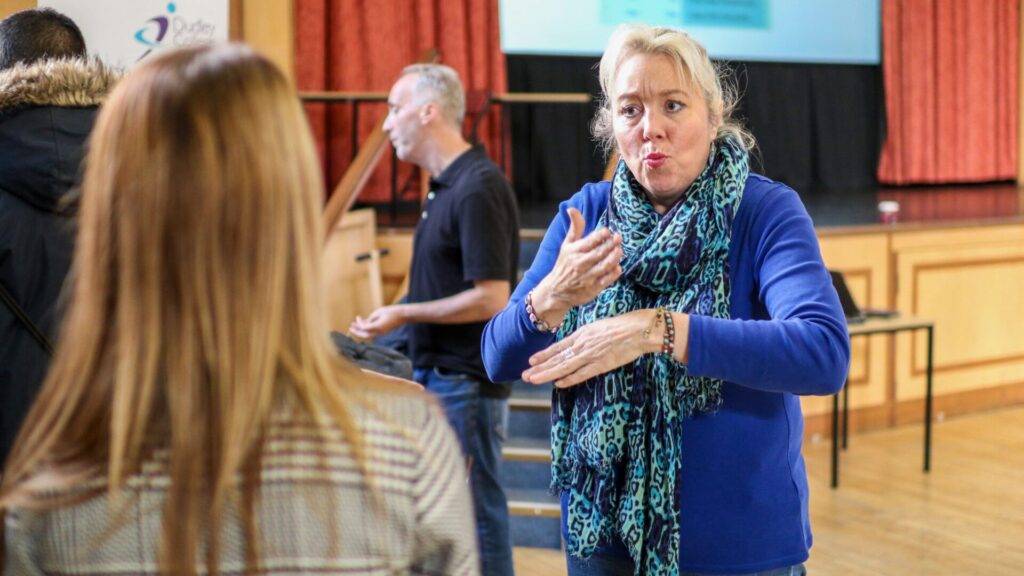
If a Deaf or Hard of Hearing person requires a sign language interpreter to communicate with others, then the organisation providing the service must also provide the interpreter.
In the UK, while there is no single law that requires sign language interpretation in all situations, however, there are several laws that require some organisations to provide reasonable communication support.
The Equality Act 2010 is an updated version of the Disability Discrimination Act and replaces previous equality legislation in England, Wales and Scotland. It extends protection from discrimination to more people with disabilities, including Deaf people who use British Sign Language in education, at work, as a consumer, using public services or buying or renting a property.
If a deaf person can show that they have been treated less favourably than a non-disabled person in similar circumstances, then they may have a case for Disability Discrimination. This could include not being provided with appropriate sign language interpretation so that they can effectively communicate with their employer. In an instance like this, a Deaf person may be able to bring a claim of Disability Discrimination under the Equality Act 2010. This legislation makes it unlawful for an employer to discriminate against a worker because of a protected characteristic, which includes disability.
Here, we take a closer look at the Equality Act 2010 and some of the things that, as an employer, you need to be aware of.
What is the 2010 Equality Act?
The Equality Act 2010 is a law that prohibits discrimination against people with protected characteristics. This includes, among other things, making sure that all Deaf and Hard of Hearing customers can access your business in the same way as a hearing person.
Doing this could require you to adapt your premises or change how you deliver customer services to ensure that you are not discriminating.
The Act also requires employers to do their best to avoid unjustified disadvantages for disabled people when recruiting, managing conditions at work, promoting opportunities and dealing with health & safety.
Discrimination against BSL users – a case in point
In October 2020, Katie Rowley, a 36-year-old Deaf woman from Leeds, began court action against the Government after their daily coronavirus briefings failed to provide BSL interpretation and translation for the Deaf community. She later won a claim against the Government after a judge found a lack of sign language at two COVID briefings ‘served to disempower, to frustrate and to marginalise’.
Many Deaf people struggle with subtitles and find it stressful, especially when the information is so important, and the information impacts their lives. Having professional sign language interpreters on hand for situations like these is vital in creating inclusive and accessible ways of communication for everyone.
How to make your business more accessible to Deaf people
Failure to provide adequate communication options for Deaf people discriminates against them, whether it’s direct or indirect, and you could find yourself in breach of the Equality Act.
To break down communication barriers, businesses must become more inclusive and accessible. There are several ways to create a better workplace environment for both employees and customers, including:
Interview processes
Even before hiring, there are adjustments you can make for the interview process to make Deaf candidates feel more at ease. Speak clearly and ensure you’re in an environment with little to no distractions, such as background noise that may hinder your communication.
Provide access to additional support
Whether it’s hiring a BSL Interpreter for an event or meeting, or providing captioning on training videos, you must ensure your Deaf colleagues and employees have access to appropriate communication support.
Workplace meetings
When using video calls, be mindful that some Deaf people rely on lipreading. This can become challenging with buffering or poorly synced video / sound. Talk with your employee to find a communication method that works for them.
Learn basic signs
Learning the British Sign Language (BSL) alphabet and basic signs will significantly improve the way you can communicate with Deaf colleagues.
Deaf Awareness Training
Deaf awareness training will make your team more aware of the different types of Deafness, the communication barriers, and how they can develop and improve their communication skills.
How Sign Solutions can help make your business more accessible for Deaf people
Business should always strive for better inclusivity both internally and externally.
This includes making your internal staff meetings accessible, as well as training staff on Deaf Awareness, especially if your business is customer facing.
Sign Solutions provides a full range of communication support services to help you make your business accessible. These include Deaf Awareness Training, video interpreting and BSL in-vision translation services, plus expert consultancy to help you share your content in a way that’s inclusive and effective.
For more information on how we can help, give us a call on 0121 447 9620 or email bookings@signsolutions.com.