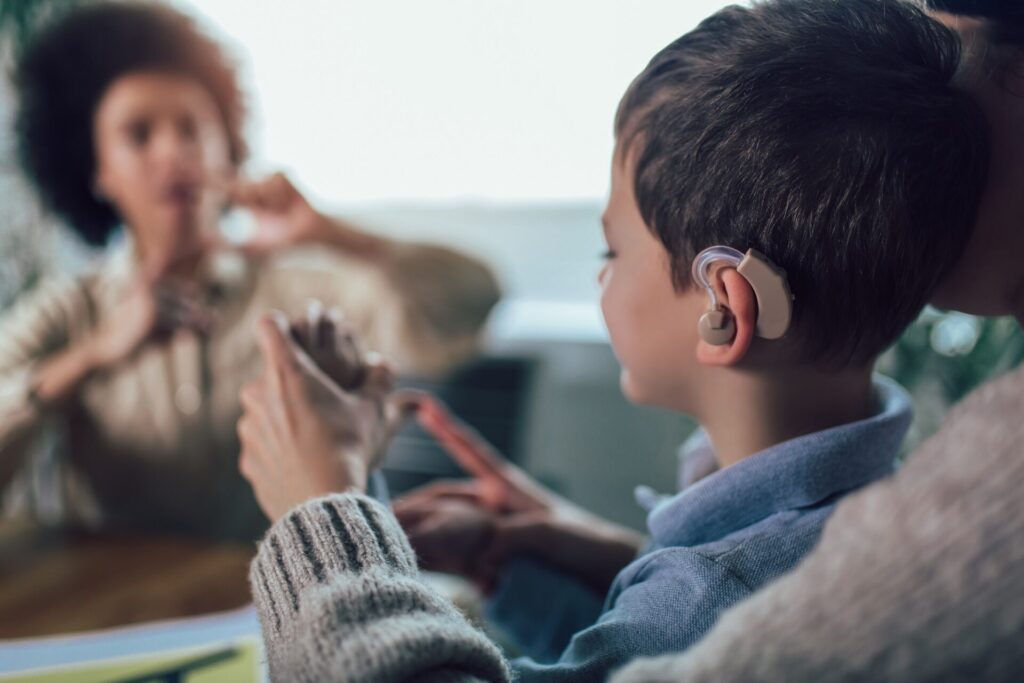
The number of Deaf people in the UK is around 11 million people. An estimated one in every 1,000 children born in the UK has severe or profound hearing loss. Many people also develop hearing impairment later in life due to ageing, illness or as the result of an accident or health issue.
This means one in every six people in the UK is likely to experience communication barriers. These are barriers that Deaf people face on a daily basis.
Many businesses and organisations struggle to communicate with Deaf and Hard of Hearing communities because they lack awareness of these barriers.
Thankfully, there are many ways to communicate that don’t rely solely on the spoken conversation. In terms of visual communication methods, the most common are British Sign Language (BSL) and Makaton; but what is the difference and how widely used are they?
There is always more your business or organisation could be doing to understand these vital forms of communications and make your services more accessible to the Deaf community. Read on to find out more.
What is Makaton?
Makaton is a unique communication system created in the 1970s that uses symbols and signs. Its name is derived from the three speech language therapists who developed it – Margaret Walker (MA), Katharine Johnston (KA) and Tony Cornforth (TON). It is largely used to support spoken words, particularly for people with learning or communication difficulties. Many users of Makaton are hearing and not considered part of the Deaf community. Today, more than 100,000 people use Makaton signs and symbols.
Makaton is designed to help both children and adults break down barriers of communication. Being unable to communicate properly with others is frustrating and Makaton opens up opportunities to help users connect with others in a more meaningful and inclusive way.
The Makaton system is based on the same grammatical structure as spoken English. Although it is used primarily in the UK, it has been adopted by 40 countries around the world. There are some signs that Makaton has in common with BSL, but most are different.
What is British Sign Language?
BSL is the first or preferred language of around 150,000 people in the UK. It has its own vocabulary and grammar and is a recognised language. Unlike Makaton, BSL is not dependent on spoken English.
BSL is a naturally evolved language that has developed over time, but only became recognised as an official language in the UK in 2003. Different regions around the UK have their own unique dialects and colloquialisms. This means that a Deaf person from the south of England may use different signs to someone from Scotland or the north in the same way a hearing person has a different accent and words in Liverpool to those in London.
Other elements that can have a significant bearing on how sign language is communicated include facial expressions, gestures, and body language. There are also many different sign languages around the world, usually based in a country or region.
BSL is widely used by profoundly Deaf people in the UK, their family, friends and communication professionals. This is in contrast to Hard of Hearing people who may use more English based forms of communication support such as hearing aids, lipspeakers, speech to text reporters and palantypists.
Who uses BSL and who uses Makaton?
Many believe Makaton and BSL are the same and used by the same groups of people, but this is a common misconception.
Makaton uses hand signs alongside speech and was designed to use with people with a learning disability or communication problems. For example, people, particularly young children, with Autism, Down’s Syndrome or verbal dyspraxia may use Makaton to communicate their wants and needs to others. Teachers and those who work with young children may also use Makaton to encourage the children to become more confident in communicating.
BSL is used by members of the Deaf community as their first or preferred language. Profoundly Deaf BSL users may have limited access to spoken and written English, making their communication very different from Makaton users who can hear.
How to learn BSL
Opportunities to learn BSL are more accessible than ever, so there’s never been a better time to acquire and develop this essential skill.
If you’re looking to make a start and work towards gaining a formal qualification in BSL, we offer bespoke courses for groups of interested learners. Although we don’t currently provide single person BSL courses, we can tailor our sessions around your organisation’s needs to help you achieve your objectives and enable you to deliver an enhanced level of customer service to the Deaf community.
Courses can be delivered in-person at our offices in the Midlands, or we can offer remote lessons via Zoom or Teams, to suit your needs.
We offer BSL training courses, from Level 1 to Level 3 awards.
Please contact training@signsolutions.uk.com for more information, or click here to contact a member of our team.