Planning a conference can be a stressful task, no matter how big or small the event. There are several things to consider, including refreshments, seating plans and speakers. Unfortunately, accessibility and inclusivity often don’t take priority which (knowingly or unknowingly) leads to discrimination against Deaf attendees.
We regularly hear evidence from Deaf and Hard of Hearing people about the barriers they face when trying to access public services, information and events. Their experiences should sit uncomfortably with anyone who believes in a fair, equal and open society.
The plain facts are that too many Deaf or Hard of Hearing people face unnecessary obstacles when trying to complete everyday tasks that hearing people take for granted. What’s more, is that many of these obstacles have simple solutions which require little or no effort on the part of the organisation or business.
So, when it comes to organising events or conferences, here are some of the things you should bear in mind to make them accessible to a Deaf audience.
How to create an accessible environment for Deaf attendees
There are several areas to consider when organising a conference with event interpretation for Deaf and Hard of Hearing people. It’s also important to bear in mind that Deafness and communication is individual, and that just one adjustment may not be right for everyone attending:
Stage layout
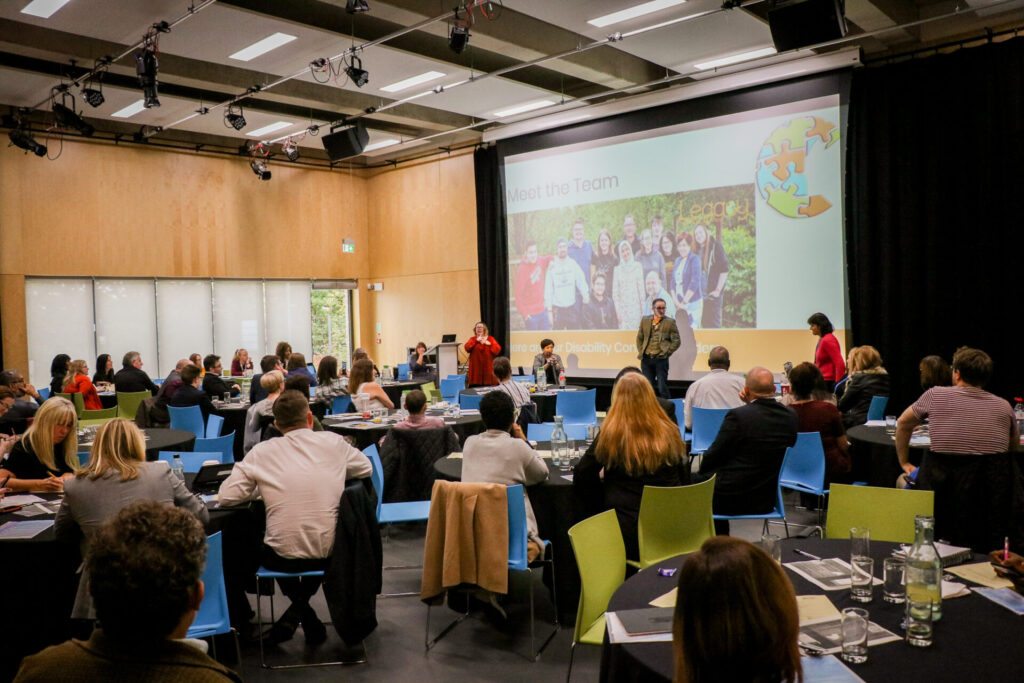
Whether your conference is in person or virtual, stage layout is crucial, especially when you have a BSL interpreter on stage with the speakers. The interpreter needs to be positioned in a clear, unobstructed position, with good lighting so that Deaf delegates can be seated with a clear, unobstructed view of the interpreter.
Materials
With most events, materials like agendas, schedules and videos are sent out prior to the event to raise more awareness of the conference and to give attendees more information on what to expect. It’s important to remember to add captions on videos, or to provide videos that feature sign language interpreters or in-vision translators. It will also be beneficial to highlight in your marketing that your event will be accessible for Deaf people. You are more likely to attract Deaf attendees and increase ticket sales and attendance.
Recordings/Online
If your conference is an online event, or if you are recording your event, it’s important to remember several things to ensure Deaf attendees aren’t discriminated against. Much like stage layout, it’s crucial for both the speaker and the BSL interpreter to be in view of the camera so any Deaf people watching can understand what’s being said. The quality of these recordings or videos is also essential. Without a high-quality feed or video stream, recordings may blur handshapes or facial expressions, making it difficult for a Deaf viewer to understand what’s being signed.
Number of BSL interpreters
Delegates who require an interpreter will more than likely need them for the whole event, not just during the presentations, especially if there are break-out sessions or networking opportunities. So, you will need to hire more than one interpreter for the day.
Other considerations
Ahead of your conference or event, you’ll need to provide the opportunity for attendees to let you know if they have any access requirements. You can build this into your online booking form and marketing materials to ensure delegates know they can make an access request.
When promoting your event, you should consider your Deaf audience in your communications. Facebook and LinkedIn are both excellent platforms for promoting accessible events for Deaf people, because they provide a good balance of visual and written communication, and you can also target your promotions to Deaf communities and groups on each platform.
When it comes to the content of your presentations, use clear, plain English free of jargon and complicated phrasing wherever possible, as this will make it easier for BSL users to understand what’s being said. Providing transcripts or slide decks afterwards will also help address any potential accessibility issues.
Please bear in mind that every Deaf person is different, so you may need to provide several types of support to enable Deaf people to participate in your conference. BSL interpreters, lipreaders, notetakers, equipment such as a loop system, and additional materials such as transcripts are some of the supports that may be requested. If you are using communication professionals, make sure they wear a badge or other form of identification, so Deaf attendees know who they are.
How to book a BSL interpreter
BSL/English interpreters provide the crucial service of facilitating communication between Deaf and Hearing people. Sign Solutions provide a vast range of accredited communication professionals for Deaf, Deafblind and Hard of Hearing users in any domain, be it legal, business, medical, educational, conference, community, theatre.
Our interpreters are DBS checked, NRCPD registered and located across the UK, providing a high-quality service to Deaf people nationwide and available in person or remotely 24 hours a day, 365 days of the year. To find out more and to book a BSL interpreter, get in touch today.