After the COVID-19 pandemic, working from home has become more of a norm for many organisations. But what does that mean for Deaf employees and their colleagues and employers? With the rise of video calls and meetings over applications like Teams and Zoom, Deaf people now face even more barriers when it comes to communicating effectively with others.
As an employer, it’s your responsibility to ensure your business is accessible to – and inclusive for – all, no matter what your employees’ needs may be.
For Deaf or Hard of Hearing people, it can become very isolating to be in an environment with people who either don’t understand Deafness or have no desire to educate themselves.
With use of videoconferencing services only set to rise in the years ahead as more organisations embrace flexible working, we take a closer look at what you need to do for your Deaf colleagues and customers.
Five ways to make your video calls more inclusive and accessible
When you’re looking to make communication styles more accessible, particularly for a Deaf or Hard of Hearing employee, the best thing an employer or fellow colleague can do is to have a conversation with said Deaf person.
Opening up the communication and actually asking the question on what the Deaf individual’s preferences would be is going to make things much easier in the long run, for everyone involved.
When it comes to video calls and conferences, there are several things you should also consider and put in place.
British Sign Language
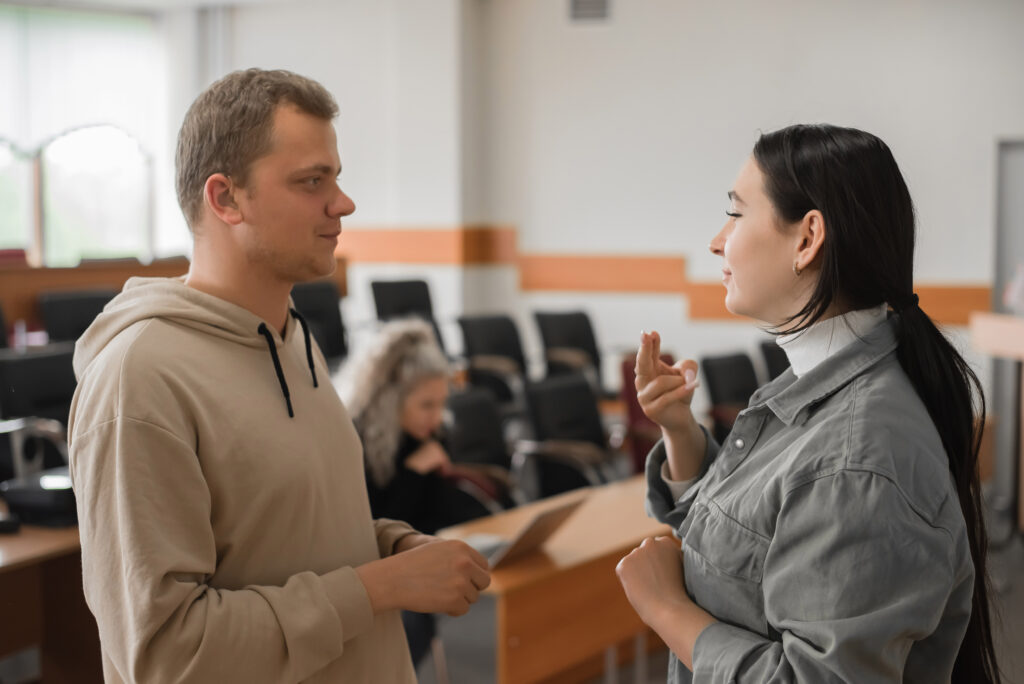
Learning the basic BSL signs will only improve the relationship you have with your Deaf colleagues. It will not only make for a better, more accessible video call, it will also give your Deaf colleague a chance to feel seen and valued, rather than relying on them to be able to lip read.
Interpreters
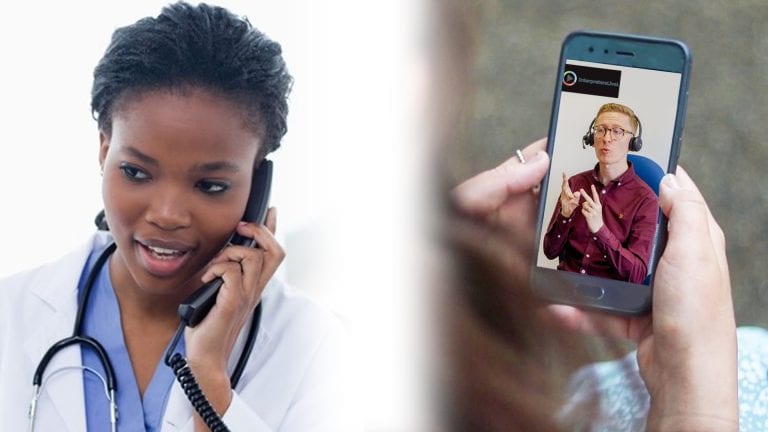
Regularly using a British Sign Language interpreter or translator in a video call will send out a clear message that you take inclusion and accessibility seriously. This will help boost employee morale. Companies like Sign Solutions offer access to BSL interpreters whenever you need them, whether it’s for an instant meeting or for scheduled calls in advance.

Captioning
Live captioning can provide Deaf or Hard of Hearing people with real time speech-to-text captions during a video call. Google Chrome has an option in the accessibility section of the settings to apply live captioning to any audio and dialogue displayed on screen. It’s likely that a lot of Deaf people will already know about this feature, but it’s certainly one tool to point out, especially if your organisation uses hybrid working between an office and home.
Sound quality
Not everyone who identifies as Deaf is completely unable to hear. Some people wear hearing aids or cochlear implants to amplify their natural hearing, and others may not have as severe Deafness as others. Ensuring the sound quality is correct on both ends of the video call is crucial for understanding between yourself and a Deaf colleague. This includes checking if any microphones and speakers are set up properly as well as checking your surroundings and that nothing will interfere with a signal or sound. A loop system put in place, wherever possible is helpful too.
Environment
There’s nothing more frustrating than taking a video call with someone who’s in a busy environment or an area with little to no signal. This is only made more difficult when communicating with a Deaf person who relies on visuals, facial expressions and clear sound for strong understanding. When organising a video call with a Deaf person, make sure you’re both in a quiet location with strong Wi-Fi & internet connectivity to avoid any disturbances or buffering. Limiting background noise and making sure you’re in full view on camera will help the communication between you and your Deaf colleague run a lot smoother.
Video calling is a great way to connect with someone who is far away and is especially handy for organisations who offer remote working styles with employees dotted all over the country. But video calls can feel very isolating for many, whether a person has a hearing loss or not. Where possible, it’s always best to at least offer a face-to-face interaction with Deaf colleagues as well as hearing colleagues to create a better sense of togetherness.