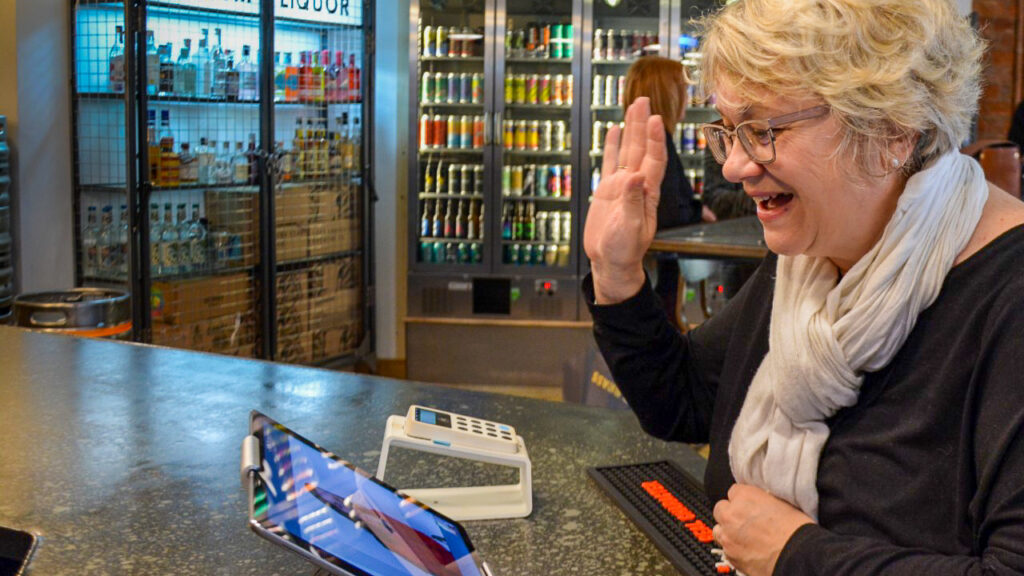
When it comes to customer service, every customer counts.
Unfortunately, many Deaf and Hard of Hearing people still face inequality and discrimination when trying to access products, services or information from businesses that most hearing people take for granted.
Although much progress has been made in recent years, many businesses and organisations still aren’t doing enough to make themselves genuinely open and accessible to all.
Communication lies at the heart of the issue.
There are around 11 million people with hearing loss in the UK, ranging from people who are Hard of Hearing to those who are profoundly Deaf.
Per head, that’s roughly the population of Belgium, Tunisia, Cuba or the Czech Republic.
That means that regardless of where your business is or what it does, the chances are it will have a sizeable Deaf audience. The size, power and reach of the internet also means that businesses need to be aware of how Deaf users interact with their websites or online channels, and make accommodations where necessary to provide a positive customer experience.
Making information as widely accessible as possible gives the Deaf community more freedom to access products and services and helps promote inclusion.
But when it comes to making your business, products and services more accessible, where do you start? Here, we take a closer look at the issues and share our top tips.
Making services accessible to a Deaf audience
The Equality Act 2010 places huge responsibilities and obligations on businesses to ensure their products and services are accessible to all audiences and don’t discriminate. This means businesses need to put in place adequate provisions for Deaf people and customers with other disabilities, so they can access services or products as easily as anyone else. For many businesses, catering to a Deaf audience can be a challenge simply because there is so much to think about. However, if you get it right and offer an outstanding customer experience to your Deaf audience, it can lead to increased sales, repeat custom and, crucially, enhanced brand loyalty. This can be worth its weight in gold as if you have a positive reputation as a Deaf-friendly service provider, it can help you attract new customers and grow your audience. When it comes to promoting accessible services and products to your Deaf customers, here are some of the key things to bear in mind:Deaf awareness and staff training
When it comes to customer service, most of the problems that a Deaf audience experiences boil down to a lack of understanding of the issues the Deaf community faces. So, it’s essential to train your customer-facing staff to make them aware of Deafness, its impacts on Deaf people, and how a lack of communication support or accessibility can make Deaf people feel. If your staff can empathise better with your Deaf customers, it leads to better understanding and fewer complaints and can help your business stay on the right side of disability discrimination laws.Accessible contact methods
When it comes to communicating, many organisations provide only generic telephone helpline numbers rather than email contacts or other ways to get in touch, such as video-calling or SMS text numbers. This can create huge problems for Deaf customers, who may have difficulties hearing on the phone. So, having multiple contact methods, both at your physical premises and online, can make it easier for deaf people to get in touch. As well as a telephone number, other contact methods could include email, SMS/text messaging, live instant messaging via your website or social media, video calling, text relay or BSL/sign video relay. These may not only be helpful for Deaf customers but those from other disabled communities too.Physical accessibility
Making your online presence DDA compliant and accessible to a Deaf audience is one thing, but what about your physical premises, such as your head office, shop or event? You can invest in several technologies to make it easier for Deaf people to gain access to a building and help them engage with your business once they are there. These include:- An accessible doorbell or intercom system
- Fire alarms that provide visual warnings as well as audio ones
- Hearing loops – it’s essential to test these regularly to ensure they work correctly
- Enhanced lighting to help Deaf people who sign or lipread
- BSL Interpreters for events and meetings
- Background noise – can this be reduced to help Hard of Hearing people hear more clearly?